 Valo Sleep
Phone and sleep
Revenge bedtime procrastination: a kinder plan to stop it
You are not lazy. You are trying to get some of your day back. Here is how to keep that time and still sleep enough.
Short answer
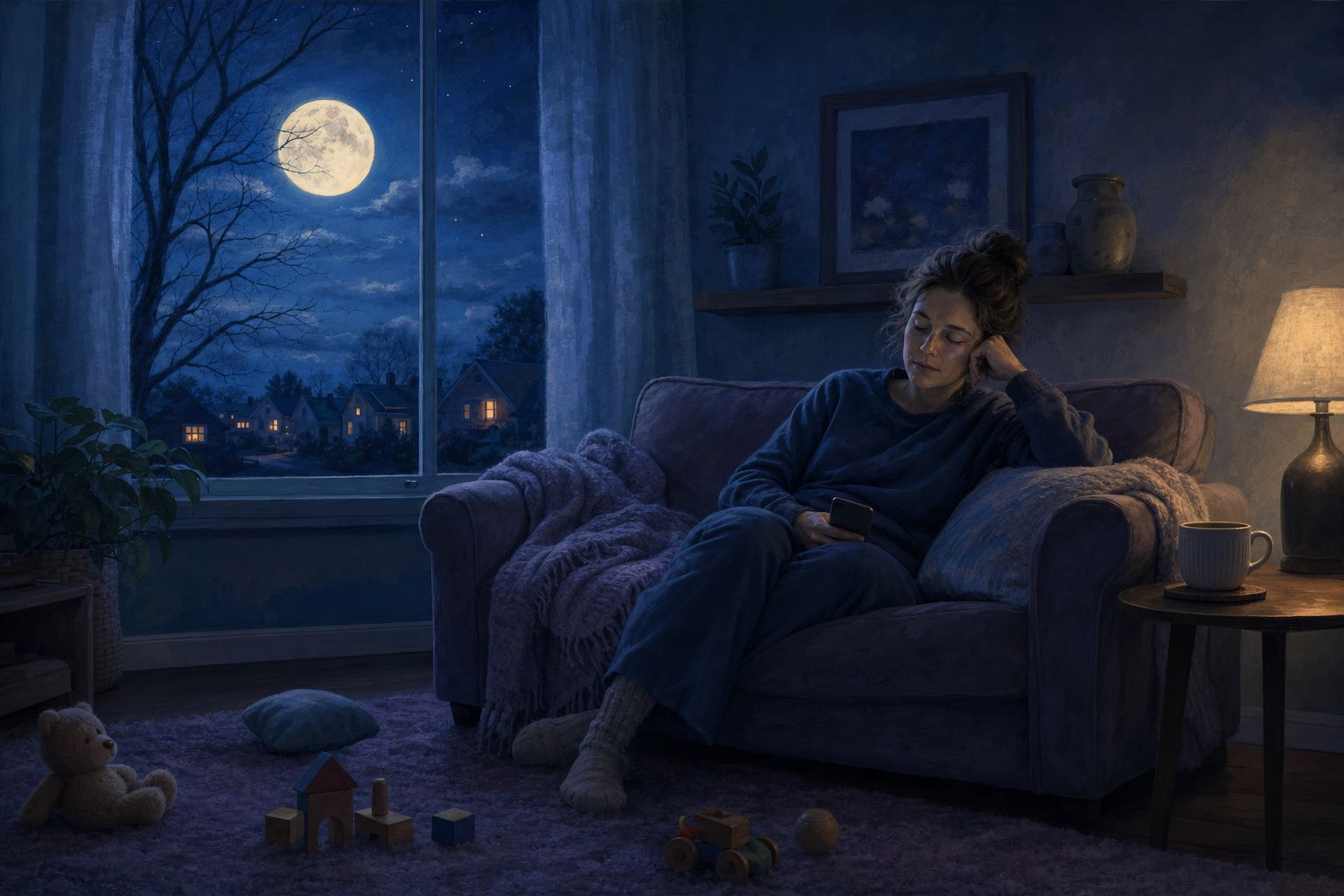
Revenge bedtime procrastination means staying up late on purpose, even when you are tired, because night is the only time that feels like yours. The answer is not to lose your free time. It is to protect it: start it earlier, give it a clear end, and make that end easy to keep.
I know late nights well. For a long time, I scrolled in bed until late, and my bedtime was different every night. Many people do this for one simple reason: the night is the only time that feels like theirs. No messages, no one needing anything. Just time for themselves.
The problem comes the next morning. You are tired, your day feels harder, and that night you want your "me time" even more. It becomes a loop.
If you know this feeling, this guide is for you. It will not tell you to lose your free time. It will help you keep it and still sleep.
What is revenge bedtime procrastination?
It is when you go to bed later than you planned, even though nothing is stopping you, because you want more time for yourself. The word "revenge" is about taking time back from a long, busy day.
The name became popular in English online in 2020. It is not a medical diagnosis. It is a simple name for a very common habit. Sleep researchers call the basic behavior "bedtime procrastination".
Signs you might be doing it
- You feel sleepy before midnight, but you still do not go to bed.
- You think, "If I stay up, today is not over yet."
- You have almost no free time during the day.
- You scroll or watch videos even when you are not really enjoying them.
- You feel guilty or tired in the morning, and then it happens again.
Many people know this habit: people with busy or stressful jobs, parents after the kids are asleep, students, and many adults with ADHD. If you are one of them, it makes sense that the night feels important to you.
Is it really a problem?
One late night is fine. The problem is when it happens most nights. Adults need 7 or more hours of sleep, and when you lose sleep night after night, your days get harder. You have less energy and less patience, and you feel even more like you need your "revenge" time. So the loop gets stronger.
The goal is not to feel guilty. The goal is to stop the loop and still keep time for yourself.
A kinder plan to stop it
- Name what you really need. Ask yourself what your night time gives you. Is it quiet? Fun? Being alone? Feeling in control? Knowing this helps you find that feeling earlier in the day.
- Move your me-time earlier. Even 30 minutes earlier helps. If you can, tell the people you live with: "From 9:00 to 10:00 is my time."
- Pick a "get ready for bed" time, not just a bedtime. Many people find this easier. Bedtime feels like a wall. A time to start your routine feels like a small, clear step.
- Choose me-time that ends by itself. A movie ends. A chapter ends. A game level ends. A feed never ends. If your free time is endless scrolling, it will always take more time than you planned. (I explain why in why you keep scrolling in bed.)
- Make the end automatic. Lock the apps that never end at your "get ready" time, so you do not have to fight yourself. My guide on how to lock apps at night on iPhone shows how.
- Make bedtime something you enjoy. A warm shower, soft clothes, a favorite sleep sound, a few minutes of slow breathing. Bedtime should feel like a reward, not like the end of the fun.
- Plan a late night on purpose. Sometimes you will want a late night, and that is OK. If it is planned, it is a choice, not a failure. Just keep it rare, like once a week.
If you are a parent
When the kids finally sleep, the house gets quiet for the first time all day. Of course you want to enjoy it. Try to protect that time early in the evening: do the tasks before the kids sleep if you can, and save the quiet time for something you really enjoy. Then let your routine start at a fixed time. Your sleep matters too, because tired parents have a harder next day.
If you have ADHD
Many adults with ADHD say this pattern is very familiar. Strict rules often fail, so choose habits that are easy for your brain:
- Use a visible timer or an alarm for your "get ready for bed" time.
- Keep the routine short and the same every night.
- Give your brain something interesting but calm, like a guided breathing exercise, a sound or a short brain dump, instead of silence.
- Expect some bad nights, and do not treat them as failure.
Questions people ask
Why is it called "revenge" bedtime procrastination?
The "revenge" is against a long day with no free time. By staying up late, people try to take some time back for themselves. The name comes from a Chinese expression. It became popular in English online in 2020.
Is revenge bedtime procrastination a disorder?
No. It is a popular name for a common habit, not a diagnosis. But if you have trouble sleeping most nights for months, or you feel very tired during the day, talk to a doctor.
Is it a sign of ADHD?
Not by itself. Many people without ADHD do it too. Many adults with ADHD say it is very familiar, so if you have other signs of ADHD and they affect your life, a professional can help you learn more.
How do I stop without losing my me-time?
Move your free time earlier, choose things that end by themselves, and set a fixed time to start getting ready for bed. Lock the apps that never end at that time, so the end of your evening happens without a fight.